Painted pottery female figurines of the Tang Dynasty

Painted pottery female figurines of the Tang Dynasty
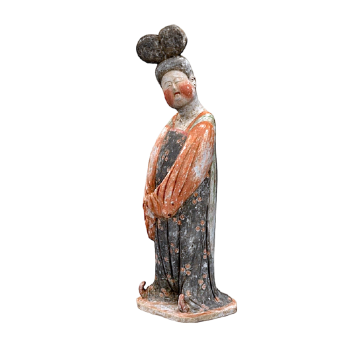
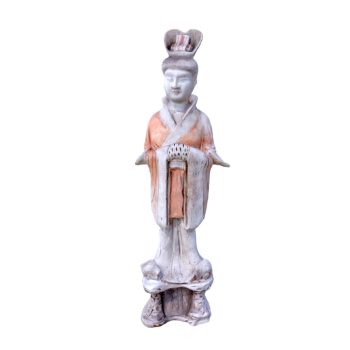
This is a Chinese Tang Dynasty painted pottery female figurines (or ladies figurines). It was made in China during the Tang Dynasty (618-907) and was one of the funerary objects (Ming ware) in the burial culture of that time. The terracotta figures are dressed in wide-sleeved gowns with cross-necked collars, their hands close to their chests, their hair in a high bun (similar to the popular "high bun" or "fallen horse bun" at the time), and their faces are plump and round. This plump shape is the embodiment of the aesthetic ideal represented by Yang Guifei in the prosperous Tang Dynasty. They usually appear in groups and are placed in the ear chambers or corridors of noble tombs, symbolizing the maids, kabuki or attendants of the tomb owner.
Ancient Chinese Painted Pottery Horse
Ancient Chinese Painted Pottery Horse

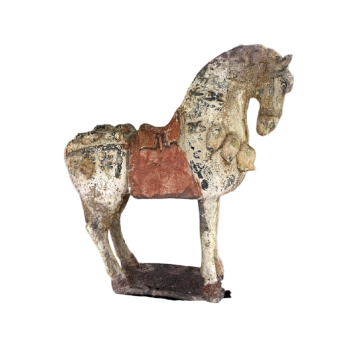
This is an ancient Chinese painted pottery horse, probably belonging to the period from the Northern Dynasty to the Tang Dynasty. It is a pottery figurine made of clay. The surface was originally decorated with painted decorations (such as red and white pigments), but most of them have fallen off due to age, revealing the plain tires at the bottom and some residual paintings. This craft was very common in ancient Chinese burial art. This realistic and vigorous image of horses prevailed in ancient China from the Northern Dynasties (such as the Northern Wei Dynasty and the Northern Qi Dynasty) to the Tang Dynasty (618-907). The depiction of horses in this period reached an artistic peak, reflecting the strong national strength and the emphasis on horses of the times.
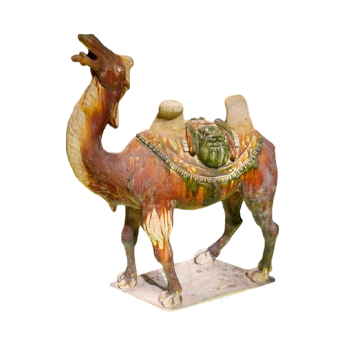
Tang tricolor camel

Tang tricolor camel

Tang tri-colored camel, an ancient Chinese pottery figurines art. It is a low-temperature glazed pottery made of clay, usually using yellow, green, white (or brown) and other glaze, hence the name "three colors". This style of pottery figurines prevailed in the Tang Dynasty (618-907) and was a treasure of the ceramic firing process at that time. Tang tricolor camels are mainly used as burial objects (ghost), reflecting the tomb owner's desire to enjoy a rich life in the grave. In the Tang Dynasty, the camel was an important means of transport on the Silk Road, known as the "ship of the desert".
Painted Handmaid Figurines of Tang Dynasty in China
Painted Handmaid Figurines of Tang Dynasty in China

This item is a painted pottery female figurines from the Tang Dynasty (618-907 AD) in China, commonly known as the Tang Dynasty maid figurines. The style of sculpture clearly reflects the artistic characteristics of the Tang Dynasty. In the Tang Dynasty, the national power was strong and the aesthetic preference was for a rich female image, which was fully reflected in the round cheeks and posture of the pottery figurines. This kind of pottery figurines is a ghost, that is, funerary objects, unearthed in the tombs of the nobles of the Tang Dynasty. They are designed to simulate the life of the tomb owner in the afterlife, including servants, maids, musicians, dancers, horses and camels.
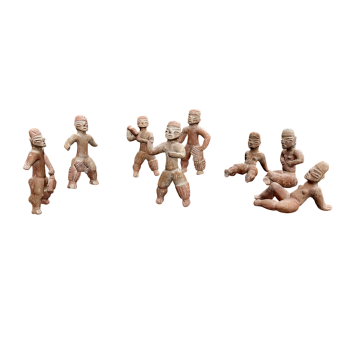
Pottery Figurines of Ancient Cuqiu Team in Mexico

Pottery Figurines of Ancient Cuqiu Team in Mexico

These pottery figurines belong to a pre-Columbian culture, an ancient artifact of Michoacán in western Mexico. These terracotta figures are usually depictions of participants in the Mesoamerican game of kickball or related sacrificial activities. In ancient Central America, this kind of ball game was not only a sport, but also a ritual with profound religious and cosmological significance, sometimes even related to life and death.
Pre-Columbian terracotta figures

Pre-Columbian terracotta figures

This item is a terracotta figurine of pre-Columbian West Mexico, commonly known as Pretty Lady or Michoacan style figurines. It originated in the Michoacán region of present-day western Mexico and dates back to the Late Preclassical period, between about 550 BC and 100 BC. These terracotta figures are mostly female figures, often with exaggerated feminine features as their main manifestations, such as plump breasts, possibly reflecting a cult of fertility and motherhood.
cock pottery figurines

cock pottery figurines

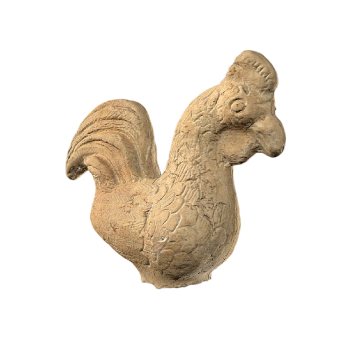
This item is a cock sculpture or figurine made of terra cotta. This type of pottery and chicken figurine was a common burial object in ancient China, especially in the Han Dynasty (206 BC -220 AD), and is usually found in burial pits in tombs. In ancient times, sculptures of animals such as chickens were placed in tombs, which may have auspicious meanings or reflect the living customs of the time. The chicken is often regarded as a symbol of "virtue bird" and auspiciousness because of its habit of keeping promises and reporting. The sculpture depicts the cock's head and tail, and the texture of the feathers is clearly visible, with a strong flavor of life and a simple artistic style.
Qin Dynasty Cultural Relics Sword-holding Terracotta Warriors and Horses

Qin Dynasty Cultural Relics Sword-holding Terracotta Warriors and Horses

The Terracotta Warriors and Horses sculpture depicts the army of Qin Shihuang, the first emperor of China. It is a martyrdom art, buried with the emperor in 210-209 BC, with the aim of protecting Qin Shi Huang in the afterlife.
Terra Cotta Warriors

Terra Cotta Warriors

The Terra Cotta Warriors, namely the Terra Cotta Warriors in the the Mausoleum of the First Qin Emperor, also referred to as the Terra Cotta Warriors or the Terracotta Warriors, are the first batch of national key cultural relics protection units and the first batch of Chinese world heritage sites. They are located in the Terra Cotta Warriors pit 1.5 kilometers east of the the Mausoleum of the First Qin Emperor in Lintong District, Xi'an, Shaanxi Province. More than 200 foreign heads of state and government have visited and toured, becoming a golden business card of China's ancient glorious civilization and also known as one of the world's top ten rare ancient tombs.
Terra Cotta Warriors

Terra Cotta Warriors

On March 29, 1974, farmers dug a well about 1.5 kilometers east of the the Mausoleum of the First Qin Emperor in Lishan Mountain and found the Terra Cotta Warriors. Lishan is an area filled with underground springs and waterways. For centuries, there have been occasional reports of pottery figurines and fragments from Qin tombs - roof tiles, bricks, and large blocks of bricks and stones. This discovery prompted Chinese archaeologists, including Zhao Kangmin, to investigate and reveal the largest group of pottery figurines in history. Afterwards, a museum complex was built in the area, with the largest pit surrounded by a roofed structure.
"Terra Cotta Warriors and Horses and Troops"

"Terra Cotta Warriors and Horses and Troops"

The Terra Cotta Warriors, namely the Terra Cotta Warriors in the the Mausoleum of the First Qin Emperor, also referred to as the Terra Cotta Warriors or the Terracotta Warriors, are among the first batch of national key cultural relics protection units and the first batch of Chinese world heritage sites. A charioteer refers to a soldier on a chariot, excluding the rider and driver. There are usually two soldiers on a chariot, namely the left chariot figurine and the right chariot figurine. The figurine on the left side of the carriage is dressed in a long robe, covered in armor, with leg guards on the shin and a crossbeam on the head. It holds weapons such as spears, spears, and halberds in its left hand, and presses the carriage in its right hand. The attire of the figurine on the right side of the car is the same as that of the figurine on the left side, but the posture is opposite. They are both the main force of tank warfare, but according to literature records, they have certain differences in weapon configuration and combat responsibilities.
Terracotta Warriors and Horses of the Qin Dynasty

Terracotta Warriors and Horses of the Qin Dynasty

In terms of identity, it is lower than the general figurine and can be classified as intermediate or lower level. The number of Qin terracotta warriors in the pit is extremely small, with less than ten unearthed, divided into two categories: the warrior robe general terracotta warriors and the armored general terracotta warriors. The armored general figurine appears to have a double or single crown on its head, and there are several different forms of armor worn. The terracotta warriors in battle robes are dressed in plain attire, but have floral knots on their chests. The front, back, and shoulders of the armored terracotta warriors are adorned with eight colorful floral knots, which are gorgeous, colorful, and elegant, highlighting their rank, identity, and majesty in the military.
Ornament Crafts Xi'an Tourist Souvenirs Qin Terracotta Warriors Qin Shi Huang Clay Figurines Clay Sculptures Single Terracotta Warriors

Ornament Crafts Xi'an Tourist Souvenirs Qin Terracotta Warriors Qin Shi Huang Clay Figurines Clay Sculptures Single Terracotta Warriors

Tang Dynasty female figurines

Tang Dynasty female figurines

The custom of burying with terracotta figures has a long history and was popular in the Tang Dynasty for its lavish burial. The craftsmanship of making terracotta warriors has also become more mature, with lifelike depictions of terracotta warriors, gorgeous clothing, and the emergence of Tang Dynasty tri colored pottery craftsmanship, which resulted in a large number of pottery artifacts being buried in noble tombs at that time. Among them, the terracotta warriors of noble women were one of the essential accompanying burial terracotta warriors.
Terracotta Warriors and Horses of the Qin Dynasty
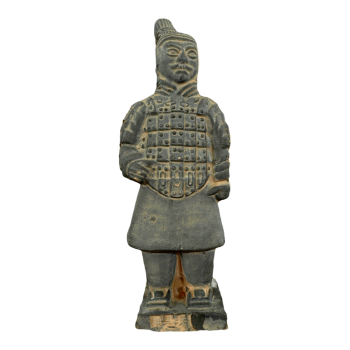
Terracotta Warriors and Horses of the Qin Dynasty

The Terra Cotta Warriors, namely the Terra Cotta Warriors in the the Mausoleum of the First Qin Emperor, also referred to as the Terra Cotta Warriors or the Terracotta Warriors, are among the first batch of national key cultural relics protection units and the first batch of Chinese world heritage sites. A charioteer refers to a soldier on a chariot, excluding the rider and driver. There are usually two soldiers on a chariot, namely the left chariot figurine and the right chariot figurine. The figurine on the left side of the carriage is dressed in a long robe, covered in armor, with leg guards on the shin and a crossbeam on the head. It holds weapons such as spears, spears, and halberds in its left hand, and presses the carriage in its right hand. The attire of the figurine on the right side of the car is the same as that of the figurine on the left side, but the posture is opposite. They are both the main force of tank warfare, but according to literature records, they have certain differences in weapon configuration and combat responsibilities.
Terra Cotta Warriors in the the Mausoleum of the First Qin Emperor in Xi'an

Terra Cotta Warriors in the the Mausoleum of the First Qin Emperor in Xi'an

The Terra Cotta Warriors, namely the Terra Cotta Warriors in the the Mausoleum of the First Qin Emperor, also referred to as the Terra Cotta Warriors or the Terracotta Warriors, are the first batch of national key cultural relics protection units and the first batch of Chinese world heritage sites. They are located in the Terra Cotta Warriors pit 1.5 kilometers east of the the Mausoleum of the First Qin Emperor in Lintong District, Xi'an, Shaanxi Province. Terra Cotta Warriors is a category of ancient tomb sculptures. In ancient times, human sacrifice was practiced, and slaves were considered as accessories of the slave owner during their lifetime. After the slave owner's death, the slaves were buried as sacrificial objects with the slave owner. The Terra Cotta Warriors are burial objects in the shape of soldiers and horses (chariots, horses, soldiers).
Terra Cotta Warriors and Horses in the the Mausoleum of the First Qin Emperor in Xi'an - Terracotta Horses
Terra Cotta Warriors and Horses in the the Mausoleum of the First Qin Emperor in Xi'an - Terracotta Horses

The Mausoleum of the First Qin Emperor Terra Cotta Warriors is the tomb of Ying Zheng, the first feudal emperor in Chinese history (259-210 BC), located at the north foot of Lishan Mountain, 3.5 kilometers east of Lintong District, Xi'an, Shaanxi Province. The horse figurine is the same size as a real horse, with straight ears and wide open eyes, and full of energy. According to the archaeological survey, the Terra Cotta Warriors were arranged into an array, simulating the military establishment and fighting patterns during the period when Qin Shihuang unified the six countries. This array of Terra Cotta Warriors includes thousands of terracotta warriors, cavalry, generals and horses.
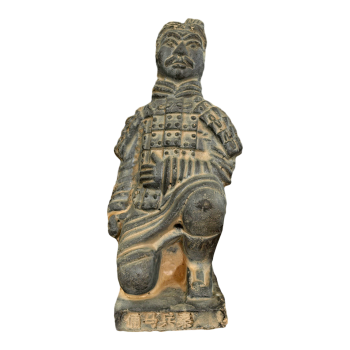
Terra Cotta Warriors in the the Mausoleum of the First Qin Emperor in Xi'an - Terra Cotta Warriors kneeling

Terra Cotta Warriors in the the Mausoleum of the First Qin Emperor in Xi'an - Terra Cotta Warriors kneeling

The Terra Cotta Warriors, namely the Terra Cotta Warriors in the the Mausoleum of the First Qin Emperor, also referred to as the Terra Cotta Warriors or the Terracotta Warriors and Horses of the Qin Dynasty, are among the first batch of national key cultural relics protection units, the first batch of Chinese world heritage sites, and are also known as one of the world's top ten rare treasures of ancient tombs. It is located in the Terra Cotta Warriors pit 1.5 kilometers east of the the Mausoleum of the First Qin Emperor in Lintong District, Xi'an, Shaanxi Province. Terra Cotta Warriors is a category of ancient tomb sculptures. In ancient times, human sacrifice was practiced, and slaves were considered as accessories of the slave owner during their lifetime. After the slave owner's death, the slaves were buried as sacrificial objects with the slave owner. The Terra Cotta Warriors are burial objects in the shape of soldiers and horses (chariots, horses, soldiers).
Terra Cotta Warriors in the the Mausoleum of the First Qin Emperor in Xi'an

Terra Cotta Warriors in the the Mausoleum of the First Qin Emperor in Xi'an

The Terra Cotta Warriors, namely the Terra Cotta Warriors in the the Mausoleum of the First Qin Emperor, also referred to as the Terra Cotta Warriors or the Terracotta Warriors and Horses of the Qin Dynasty, are among the first batch of national key cultural relics protection units, the first batch of Chinese world heritage sites, and are also known as one of the world's top ten rare treasures of ancient tombs. It is located in the Terra Cotta Warriors pit 1.5 kilometers east of the the Mausoleum of the First Qin Emperor in Lintong District, Xi'an, Shaanxi Province. Terra Cotta Warriors is a category of ancient tomb sculptures. In ancient times, human sacrifice was practiced, and slaves were considered as accessories of the slave owner during their lifetime. After the slave owner's death, the slaves were buried as sacrificial objects with the slave owner. The Terra Cotta Warriors are burial objects in the shape of soldiers and horses (chariots, horses, soldiers).
Terra Cotta Warriors in the the Mausoleum of the First Qin Emperor

Terra Cotta Warriors in the the Mausoleum of the First Qin Emperor

The Terra Cotta Warriors, namely the Terra Cotta Warriors in the the Mausoleum of the First Qin Emperor, also referred to as the Terra Cotta Warriors or the Terracotta Warriors, are among the first batch of national key cultural relics protection units, the first batch of Chinese world heritage sites, and are known as one of the world's top ten rare treasures of ancient tombs. It is located in the Terra Cotta Warriors pit 1.5 kilometers east of the the Mausoleum of the First Qin Emperor in Lintong District, Xi'an, Shaanxi Province. Terra Cotta Warriors is a category of ancient tomb sculptures. In ancient times, human sacrifice was practiced, and slaves were considered as accessories of the slave owner during their lifetime. After the slave owner's death, the slaves were buried as sacrificial objects with the slave owner. The Terra Cotta Warriors are burial objects in the shape of soldiers and horses (chariots, horses, soldiers).
Pottery Figurines of the Zodiac in the Northern Wei Dynasty: Pottery Figurines Dog

Pottery Figurines of the Zodiac in the Northern Wei Dynasty: Pottery Figurines Dog

The Terracotta Warriors of the Twelve Palaces is a work of the Northern Wei Dynasty in China, made in the 500 AD era. This terracotta figure is made of gray terracotta, and there are traces on the surface that show that it was coated with slippery soil. This pottery figurine is part of the Zodiac series, and the animals represent the traditional concept of time in ancient China. This group of pottery figurines is currently in the collection of the Cleveland Museum of Art. The pottery figurines of the Northern Wei Dynasty showed the great confluence of the farming culture of the Han nationality in the Central Plains and the nomadic culture of the northern grassland at that time, as well as the new look of ancient pottery under the influence of the flourishing Buddhist statues and sculptures.
Pottery Figurines of the Zodiac in the Northern Wei Dynasty: Pottery Figurines Dragon

Pottery Figurines of the Zodiac in the Northern Wei Dynasty: Pottery Figurines Dragon

The Terracotta Warriors of the Twelve Palaces is a work of the Northern Wei Dynasty in China, made in the 500 AD era. This terracotta figure is made of gray terracotta, and there are traces on the surface that show that it was coated with slippery soil. This pottery figurine is part of the Zodiac series, and the animals represent the traditional concept of time in ancient China. This group of pottery figurines is currently in the collection of the Cleveland Museum of Art. The pottery figurines of the Northern Wei Dynasty showed the great confluence of the farming culture of the Han nationality in the Central Plains and the nomadic culture of the northern grassland at that time, as well as the new look of ancient pottery under the influence of the flourishing Buddhist statues and sculptures.
Pottery Figurines of the Zodiac in the Northern Wei Dynasty: Pottery Figurines Rat

Pottery Figurines of the Zodiac in the Northern Wei Dynasty: Pottery Figurines Rat

The Terracotta Warriors of the Twelve Palaces is a work of the Northern Wei Dynasty in China, made in the 500 AD era. This terracotta figure is made of gray terracotta, and there are traces on the surface that show that it was coated with slippery soil. This pottery figurine is part of the Zodiac series, and the animals represent the traditional concept of time in ancient China. This group of pottery figurines is currently in the collection of the Cleveland Museum of Art. The pottery figurines of the Northern Wei Dynasty showed the great confluence of the farming culture of the Han nationality in the Central Plains and the nomadic culture of the northern grassland at that time, as well as the new look of ancient pottery under the influence of the flourishing Buddhist statues and sculptures.
Pottery Figurines of the Zodiac in the Northern Wei Dynasty: Pottery Figurines Pig

Pottery Figurines of the Zodiac in the Northern Wei Dynasty: Pottery Figurines Pig

The Terracotta Warriors of the Twelve Palaces is a work of the Northern Wei Dynasty in China, made in the 500 AD era. This terracotta figure is made of gray terracotta, and there are traces on the surface that show that it was coated with slippery soil. This pottery figurine is part of the Zodiac series, and the animals represent the traditional concept of time in ancient China. This group of pottery figurines is currently in the collection of the Cleveland Museum of Art. The pottery figurines of the Northern Wei Dynasty showed the great confluence of the farming culture of the Han nationality in the Central Plains and the nomadic culture of the northern grassland at that time, as well as the new look of ancient pottery under the influence of the flourishing Buddhist statues and sculptures.
1 2 Next